
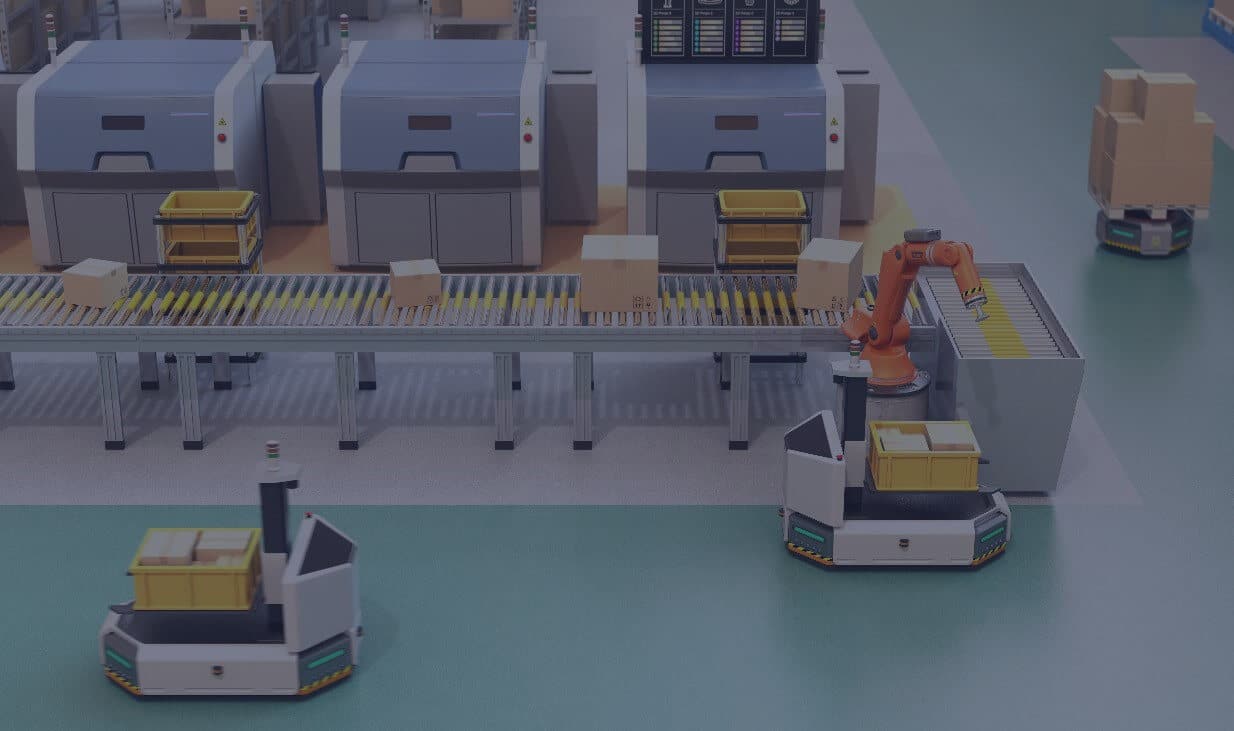
Using digital tools to create an innovative logistics concept
We create an innovative logistics concept for you
The aim of a logistics concept and the planning of new material flows or the optimization of existing processes is to minimize transport, storage and handling costs and reduce investment and space requirements. Well-structured processes and areas of responsibility create a high level of reliability, staff reduction and a flexible response to fluctuating business volumes. Companies need an efficient and economically viable logistics system that meets current and future requirements, works unobtrusively in the background and does not incur unnecessary recurring and one-off costs.
Efficient and economical logistics concept
The planning, management and control of the material and immaterial flow of goods not only within the company, but also between suppliers and end customers and between partner companies is the definition of logistics. For this to work smoothly, a logistics concept is essential for every company. The most important areas are
- Procurement logistics
- Production logistics
- Distribution logistics
- Information logistics
- Disposal logistics
- Spare parts logistics
We design your logistics
Transport, storage and handling costs can only be minimized if the processes are well structured. It should be borne in mind that the company needs an efficient and economically viable system not only to meet current requirements, but also future ones. A logistics concept is therefore the means to an end. Minimize your costs and ensure sustainability in your company with an optimal logistics concept. After all, this is the only way to stay ahead of the competition in the long term. We at Bross Consulting are happy to help you. We will work with you to create logistics concepts that comply with all relevant standards.
Logistics systems for the future
The logistics industry is constantly facing new challenges. New solutions are needed to ensure long-term economic viability. Tried and tested logistics concepts are just as much up for discussion as new ones. We would like to introduce you to three components of future-oriented logistics concepts:
- Artificial intelligence and autonomous logistics: this makes processes more efficient, prevents downtime and records data more quickly and easily.
- Logistics 4.0: The internet will also play a central role in future logistics concepts. After all, objects can be linked to others via the network and data on their condition can be passed on. This can be used in networked department stores or intelligent delivery solutions, for example.
- Multichannel logistics: A broad positioning and diversification of sales logistics channels ensures more stable logistics processes and minimizes the risk of delays.
How we create a logistics concept
A robust logistics concept connects material flow, information flow, technology, space and organization. We develop it in four transparent steps:
- Clarify objectives and data: Volumes, item structures, inventory, orders, service levels, space and constraints provide a shared basis.
- Segment material flows: Parts and processes are grouped by consumption, dimensions, value, variance and supply requirements.
- Evaluate concept alternatives: Storage, transport, supply, automation and control are compared as one system.
- Implement the preferred concept: Processes, technology, roles, KPIs and migration steps are specified.
What an implementable logistics concept contains
Depending on the task, deliverables include material flow and process maps, dimensioning, space and layout concepts, technology decisions, staffing and equipment requirements, and an investment and implementation roadmap.
Related services include our material flow analysis, warehouse planning and the glossary guide to material supply at the workplace.
Neutral framework for option selection
Options are not selected by a single cost figure. A decision matrix can weight process stability, space demand, investment, staffing effort, scalability and implementation risk. The rating scale, data source and sensitivity are documented so that the decision remains transparent when assumptions change.